

You got Qs, I got As. That’s the name of the game here. If you saw my earlier post announcing this AMA, then you already know what’s up. If you didn’t then you still probably know what’s up. Simply: I requested readers submit questions about any topic, including math, for me to answer. I ended up with a very nice range of queries, and here are my responses! The last one is particularly fun, in which I give my advice on where someone looking to get into classic movies should start.
Q: What's your favorite movie of the decade so far?
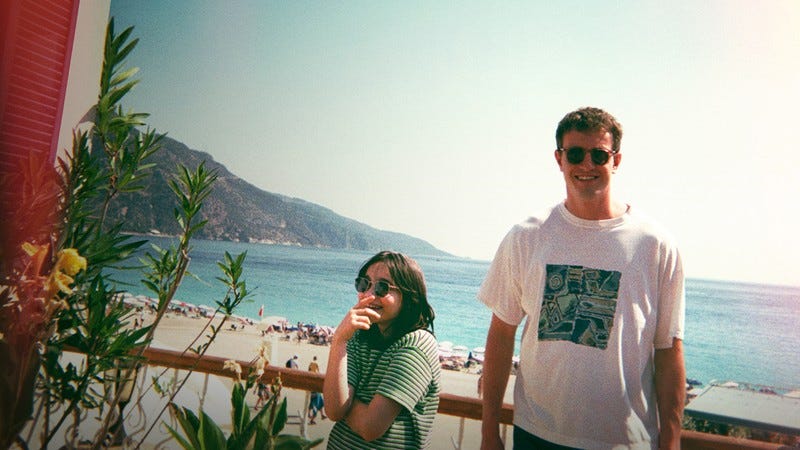
A: The truth is, this is the kind of thing I rarely think about deeply, though I’ll often toss out wild claims like “Red Rooms is best of the decade material” or “Tenet might be the best movie ever made.” Those two films stick out for me, but I think my real answer is Charlotte Welles’s Aftersun, a movie that affected me so deeply that when I saw it at TIFF, as the movie ended I had to run out to a bathroom stall to have a good private cry. I watched it a second time some months later, and not only did the film lose none of its power, I was left agog at how impeccably constructed it was while still feeling totally natural, like a bunch of memories that never leave you but slip through your fingers anyway. I’m quite confident calling it one of the best debut features ever made, so calling it best of the decade doesn’t seem like a stretch.
Q: If you had to be on a six-hour train ride with someone else, and you had to maintain eye contact and converse with that person the whole time, who would it be and why?
A: Diabolical question right here. The eye contact thing makes this pretty impossible. I suppose the question might be searching for some celebrity answer, but this all sounds too intimate for that. I’d be frightened more than anything. So my answer is probably just my good friend Amir, who I basically have six-hour conversations with every time we hang out. On a train would make it that much more exciting!
Q: What is your favorite Taylor Swift album and why? What is your favorite Taylor Swift song that is NOT on your favorite album?
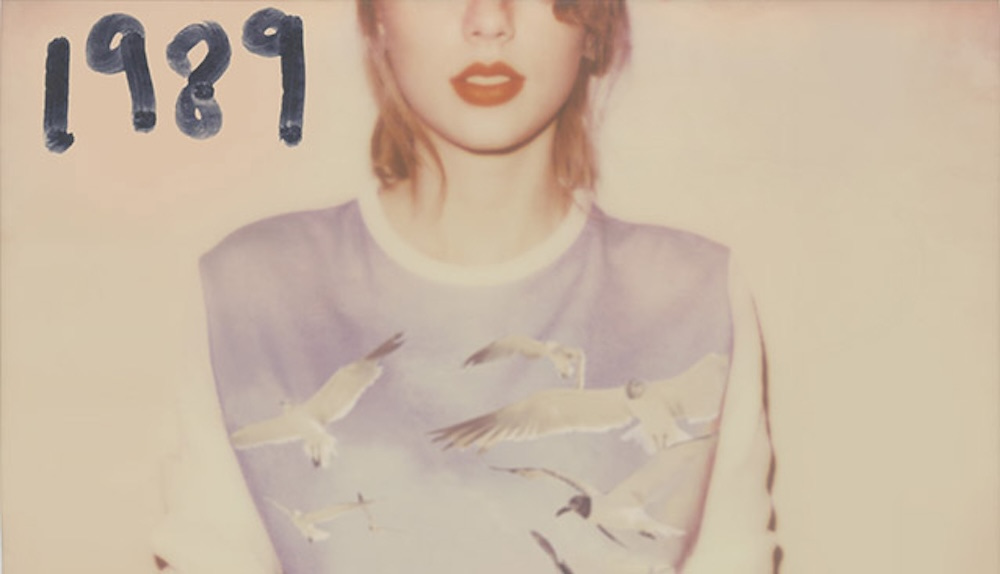
A: Alright, the good stuff! My favourite Swift album will always be 1989, which is also the album that turned me around on her. Not that I disliked her before, and what I’d heard off of Red was great, but I just didn’t bother listening to the album at the time. But when 1989 dropped, I listened to that. And I loved it, like any reasonable person should. Does she have better albums? Probably. But not to me. That also makes picking my favourite Taylor song not on my favourite album pretty easy, because my favourite of her songs is “exile”, off of folklore. Her best, most emotionally piercing song, helped by Justin Vernon’s incredible vocal performance.
Q: What is your first sense memory of a movie theater?
A: I was just talking about this with some friends the other day. I know for a fact that the first movie I saw in a theatre was a re-release of The Jungle Book in the early ‘90s, but I have no memory of that. My first real memory of being in a movie theatre was seeing Ace Ventura: When Nature Calls, though I’m sure I’d seen a number of other movies in between that and The Jungle Book. I remember the simple raked floor of the theatre, which in my memory was quite large, but for all I know was actually tiny compared to the giant multiplex screens we’ve got now. I also remember almost dying of laughter at Jim Carrey coming out of that mechanical rhino. Still one of the funniest things ever put onscreen.
Q: Do you really want questions on math! If so, when you first learned matrices how did it feel? And how long did it take you to learn?
A: I have no idea what any of this means, because mathematics is my enemy.
Q: Why haven’t we seen more Air Bud movies in this era of special effects?
A: Because Hollywood is run by cowards!
Q: Also, have you seen Sorry, Baby? If so, IS it as amazing as everyone is saying or is there just some realllly good marketing going on?
A: I have seen Sorry, Baby! And it’s really good! Amazing as people say? Not sure about that. It’s well made, and intelligent, and moving, and I love that it seems as influenced by Hereditary as it is by any number of other indie dramas and comedies. Eva Victor holds the movie surprisingly well. I do think it’s missing some extra oomph that would tip it over into true greatness, but very much a movie worth seeing.
Q: Last year, you posted that you were curious to see whether "The Brutalist is a great film like Tár, which ends up fading away as just another great film from that year, or whether it’ll stick around like There Will Be Blood did."
I took issue with your assertion that Tár had "faded away" (at least not in my mind it hasn't) but was intrigued by the question. Have you arrived at an answer?
A: This is a great one. I have arrived at an answer! When I said Tár has faded away, I mean it not on a personal level, but on a cultural one. So much discourse surrounded it, but then the movie itself has fallen back to being, as I said, just another great film from that year. That’s not a slight on the movie, but I think more of a comment on the space the film occupies culturally. It was mostly seen by a kind of elite cinephile class, which makes it hard to treat as a film that really moved the needle, especially when it’s about such contemporary social issues. Maybe in a past era, like at the height of Mirimax, it would have crossed over a bit more, and that would have changed my perception.
The Brutalist ultimately fits into the same category. I haven’t stopped thinking about it. But at the end of the day, so few people saw it, and so many cinephiles talked shit about it, that even I don’t bring it up that often. I’m much more likely to bring up Babylon, if only to stir shit up.
Q: You are forced to karaoke. What is your "go-to song" and why?
A: I cannot be forced! I love doing karaoke, but specifically private room karaoke, Korean style, with a group of drunk friends. In that situation, I have many go-to songs, but the one I’ve perfected is “Teenage Dirtbag” by Wheatus. If theoretically forced to sing in front of a bar, I’d also probably choose that. Simply because I’m good at it. Or, as good as my terrible voice will allow me to be.
Q: Movie you're most looking forward to this year?
A: I hate to choose something as obvious as One Battle After Another. Paul Thomas Anderson directing Leonardo DiCaprio in a big budget Pynchon adaptation? Come on. There’s not really another good answer here. Though I will throw in both Weapons, Sentimental Value, and Wake Up Dead Man as highly anticipated titles.
Q: How many times total have you watched Tenet?
A: According to Letterboxd, 13 times. But it’ll probably be 14 very soon.
Q: Is there a movie very much in your wheelhouse on paper but falls woefully short in execution?
A: Had to think about this a bit, but I think I’ll go with Playtime. It’s true of any Jacques Tati film, if I’m being honest, but that’s the big one. I’ve seen it a few times, including on 70mm, and each time, I come away admiring the craft of a comedy I should by all rights adore. Yet I never laugh, and I end up finding the drawn out scenes of meticulous French physical comedy quite tedious.
Q: Say someone is trying to get into film. What would be your top 5 classic movies you would recommend they watch first that you just know would make them love cinema? Probably a little more on the commercially appealing side?
A: This is a tricky question, but one I love. The problem is that becoming a cinephile is more about mindset than anything. Just ask the Chapo boys! If you go into movies open to the idea that they’re not always going to satisfy you in traditional ways, you’ll find that even movies you don’t like can be an enriching experience. Sometimes you’ll even find yourself liking a movie the more you think about it. So before any movie recommendations, I’d say just get yourself into movie mindset, where cinema just becomes one of many great windows onto the world. From there, here are some picks:
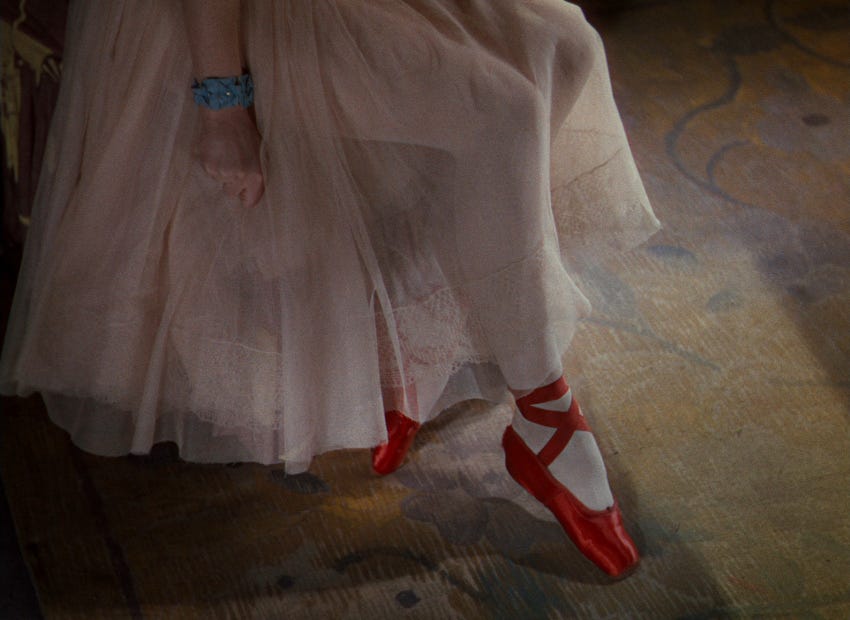
The Red Shoes, by Michael Powell and Emeric Pressburger. Happens to be my grandmother’s favourite movie, but it’s also one of the most purely impressive films ever made. Powell and Pressburger are perhaps the great British filmmakers, and their work with colour and visual effects in this film about a ballet company, its hardheaded director, and a dancer torn between her commitments to art and love is just one of the best things you’ll ever see. Helps that it’s also highly infleuntial, on obvious stuff like Black Swan and less obvious stuff like Shutter Island.
The 400 Blows, by François Truffaut. One of my own favourite movies, which I’ve seen many, many times over the years. A coming of age story about a young boy, Antoine Doinel, a real troublemaker, but also a good kid quite neglected by his parents. It also helped kick off the French New Wave, which really did mark a sea change in global cinema. There’s not much more I can say about it other than it’s gorgeous to look at, very charming, and unbelievably moving.
7th Heaven, by Frank Borzage. It would not be right to do this list without including a silent film. There is so much amazing silent cinema worth diving into, which only makes it sadder that so many silent films have been lost. There are more famous or popular titles, including among cinephiles. Things like Metropolis, or The Cabinet of Dr. Caligari, or Nosferatu, or Sunrise: A Song of Two Humans, or any number of Chaplin, Lloyd, and Keaton films. Watch all of them and more. But to me, Frank Borzage (pronounced Bore-Zay-Ghee) is the great American director of the late silent period. He’d worked as an actor before becoming a director, coming up with the likes of John Ford, but he became incredibly influenced by the German Expressionists, and particularly F.W. Murnau, who came to work at Fox around the same time as Borzage. 7th Heaven is generally considered Borzage’s greatest silent picture, about Chico, a sewer worker who dreams of being a street sweeper, who falls in love with a woman disowned by her parents for engaging in prostitution. The couple is separated when WWI starts and Chico is sent off to war. It’s a gorgeous, gorgeous film, an unabashed in its earnest melodrama and belief in the power of love to transform the spirit. It’s not only a great entry point for silent cinema, it can also help teach you how to watch silent films, right down to accepting styles that might seem hokey to modern audiences.
North by Northwest and Vertigo, by Alfred Hitchcock. There are so many Hitchcock films to choose from, so I decided to cheat a little. Vertigo is, to put it simply, one of the greatest films ever made, though it wasn’t appreciated as such at the time. It’s very possible a person coming cold to Hitchcock nowadays will be taken with it, but I think working your way to it is useful, particularly given that so much of what’s great about Vertigo comes from an understanding of how Hitch is messing around with his own established conventions. So, my recommendation, start with North by Northwest. Rear Window is probably the more obvious choice to match up, but North by Northwest is just so absurdly entertaining. Cary Grant at his very best as a man falsely believed to be involved in a spycraft conspiracy, being chased all over America in some of the grandest adventure filmmaking of all time. Pure fun. Then put on Vertigo for something that’ll also get you going intellectually.
Tokyo Story, by Yasujirō Ozu. This is probably the least accessible film I’m going to recommend. In fact, it’s not even one of my personal favourites, though I’ve grown to appreciate it more and more over the years. The reason I’m recommending it is its formal qualities. It tells the story of two elderly people who take a long trip to visit their adult children, only to find their kids don’t have much time for them. It’s a beautiful film, and very moving. It’s also over two hours long, and in Ozu’s style, it is made up of mostly long, still shots in framed in very two-dimensional ways, almost like Wes Anderson without the quirk. The camera rarely moves, so everything comes down to composition and the way characters occupy the frame. It’s a slow movie, which can make it somwhat challenging, particularly at home, but it’s also a rewarding movie, and one that demonstrates how stillness can work as one of cinema’s greatest assets. Plus, it might make you cry.
Thanks for reading, and thanks to everyone who submitted questions. This was fun for me, and hopefully fun to read. If folks like it, look out for another AMA down the road!
Further writings to pique your interest:

