

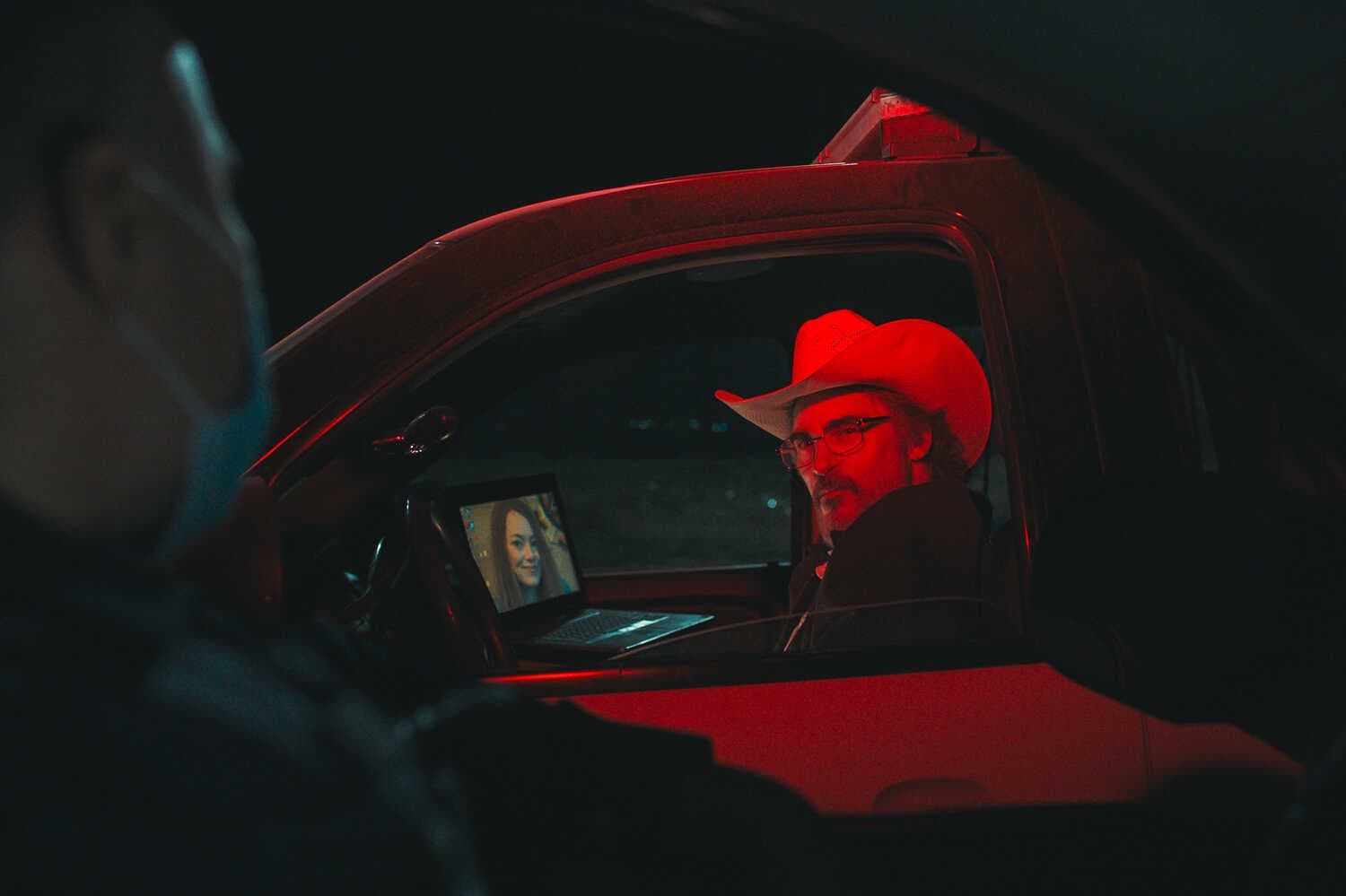
I’ve been thinking a lot about Eddington. I wrote about Ari Aster’s new film last week for The New Republic, and when I did, I will admit I maintained a slight ambivalence about the film. I thought it was very good, as you might be able to tell from my quite even-tempered review. I was even tossing in my mind whether it’s a great movie. It felt a little long, though, and unweildy in spots, and these minor flaws kept me from feeling I could fully embrace it. But the movie wasn’t leaving my mind, so I headed out to the Scotiabank theatre to see it again, and ended up bumping into my buddy Alex Acton-Jones, there to see it as well, and a little apprehensive after not much caring for Midsommar or Beau is Afraid. Alex came out loving it. I still felt a stick up my ass, despite showering it with nothing but praise in our post-movie chat on the corner of Richmond and John. Still, it didn’t leave my mind.
In the week since, I read more about the film, and listened to more interviews, and those helped solidify my positive feelings. There was something else happening, though. It’s one thing to watch a film and think it’s good—or great!—and it’s also well and good to be thinking about a movie, its themes, its construction, all that good stuff. Slowly, though, as the days went on, I found myself taking seriously the movie’s depiction of the early days of the pandemic, and the sociopolitical madness that took hold, which we continue to live through. Not merely satire, I realized Aster had put forth a very sincere diagnosis of our present condition: Our civilization is being torn apart by an inability to communicate. This fraying is not some surface-level issue, nor is it as simple as blaming social media (though there is plenty of blame to be shouldered there). Rather, it is down to a mode of engagement we’ve descended to, one in which technological mediation has allowed us to shield ourselves from each other while still being so affected by the world around us. It is a madness born of powerlessness. A powerlessness we eagerly sought for all the conveniences the modern world would supply in return. What power we had, we gave up to the corporate overlords of our day. As my friend Sam Fragoso told me, there can’t be a revolution in the streets so long as Netflix exists.
Now, perhaps this is all very obvious, but the thing that’s stuck for me in Aster’s presentation is the agency it implies we still hold. Perhaps we don’t directly control the levers of power, but we can still choose to engage with each other differently, more seriously, more generously. It’s hard to think that way when fascism is rising and evil seems to be spreading, but there’s value, as Eddington perversely demonstrates by omission, in recognizing the humanity we share. “There’s a way to treat people,” says Joaquin Phoenix’s Joe Cross, though he hardly lives up to that statement throughout his descent into conspiracy and violence. Yet, he’s right. There’s a way to treat people, and the more and more I’ve pondered the film, the more I think that statement is a bright, neon sign pointing the way forward. Or at least, the beginnings of a way forward.
Aster was on Sam’s show, Talk Easy, this week, and it’s a fantastic conversation, in which the director shares his pessimism about the world, but in that way, illuminates the heart we stand to lose if we allow that pessimism to infect our interactions with the people around us. Take a listen, and go see Eddington.
On the blog this week, I wrote about Todd Haynes’s Far from Heaven, and the need for a new contemporary aesthetic.

I also had a little fun watching and rewatching the five-star three-star classic Hard Target, starring JCVD and directed by the legendary John Woo.

Reading, Watching, Listening
Here are some things I’ve consumed and enjoyed over the last week.
Chimpanzees sticking grass up their butts is not something I would ever have expected to recommend on this newsletter, but here we are, thanks to the incredible Sabrina Imbler at Defector, who knocked it out of the park this week with her story about… well… chimps sticking grass up their butts. It’s the story of a chimp named Juma, who was observed sticking a piece of grass in his rectum for no discernible reason. “Juma's invention spread quickly, with another chimp, Commando, sticking a grass in his rectum on the same day. Later that week, chimps Aimi, Congo, and Victoria all stuck grass in their rectums, followed by John a few months later,” Imbler writes. You’ll just have to read the story to learn more.
Prehistoric copper mines are another subject I never thought I’d cover here, but yesterday I came across a great YouTube video about exactly that.
The video itself, by YouTuber Dan Davis, is great and very informative. Despite knowing full well that prehistoric humans were humans just like us, with the same capacity for intelligence and ingenuity, it remains difficult to comprehend what they were not only capable of, but what they accomplished. So watching videos like these leaves me continually astonished and delighted to learn just how much we have in common with our ancient ancestors, thousands of years distance be damned.
Domestic Violence and Ballet, by Frederick Wiseman were screened this week as part of TIFF’s mini retrospective of the great documentarian. I’d seen neither film before, and as you can imagine, one was harrowing in many ways, while the other mesmerizing. In Domestic Violence, Wiseman first rides along with some cops responding to domestic violence calls before settling in for the majority of the three hours at a shelter in Tampa, where mostly women and their children learn to cope while trying to detach themselves from abusive situations. Though harrowing and upsetting, there’s so much beauty to be found in the strength these women show in the gravest of circumstances, as well as the good people dedicated to helping them.
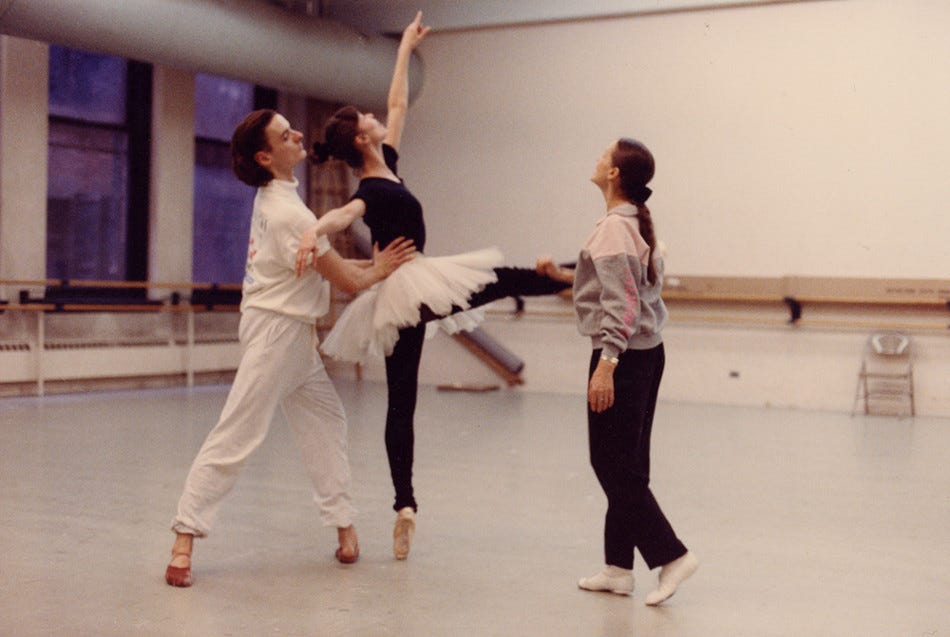
“Ballet,” dir. Frederick Wiseman Ballet is another three-house doc, about the American Ballet Theatre, documenting their training for a new touring season, followed by footage of those performances. It is an utterly entrancing, immersive film about the process and dedication it takes to produce such glorious art in movement. Another extraordinary work, and like so many of Wiseman films, available to stream on Kanopy.
“When will my reflection show who I am inside,” by the wonderful Del Winters, is a great sort of film survey, looking back on decades of political filmmaking and how artists have used the medium to reflect the policy failures that got them to their contemporary moments. Indeed, Winters boldly suggests that for as powerful as filmmaking and art can be in the development of politics, they cannot act as a substitute.
“Who Framed Roger Rabbit steamrolled the box office charts in 1988 by exploiting middle-class white American hand-wringing over eminent domain that mostly harmed working-class Black neighborhoods. By then, we were years into the Reagan administration’s dismantling of the New Deal safety net. In a country with robust participatory democracy, these fears could have been transformed into political leverage. Instead, as happens often in America, anxieties best answered through political organizing were instead only answered at the cinema,” Winters writes.
This is sharp social criticism disguised as art criticism, and it hit me at exactly the right moment, while I was still processing Eddington.
That’s all for this week! Thanks for reading, and thanks for subscribing. It really means a lot. Come back next week for more!