
Five-Star Three-Star Cinema Club #3: Insomnia
A few words about endless light

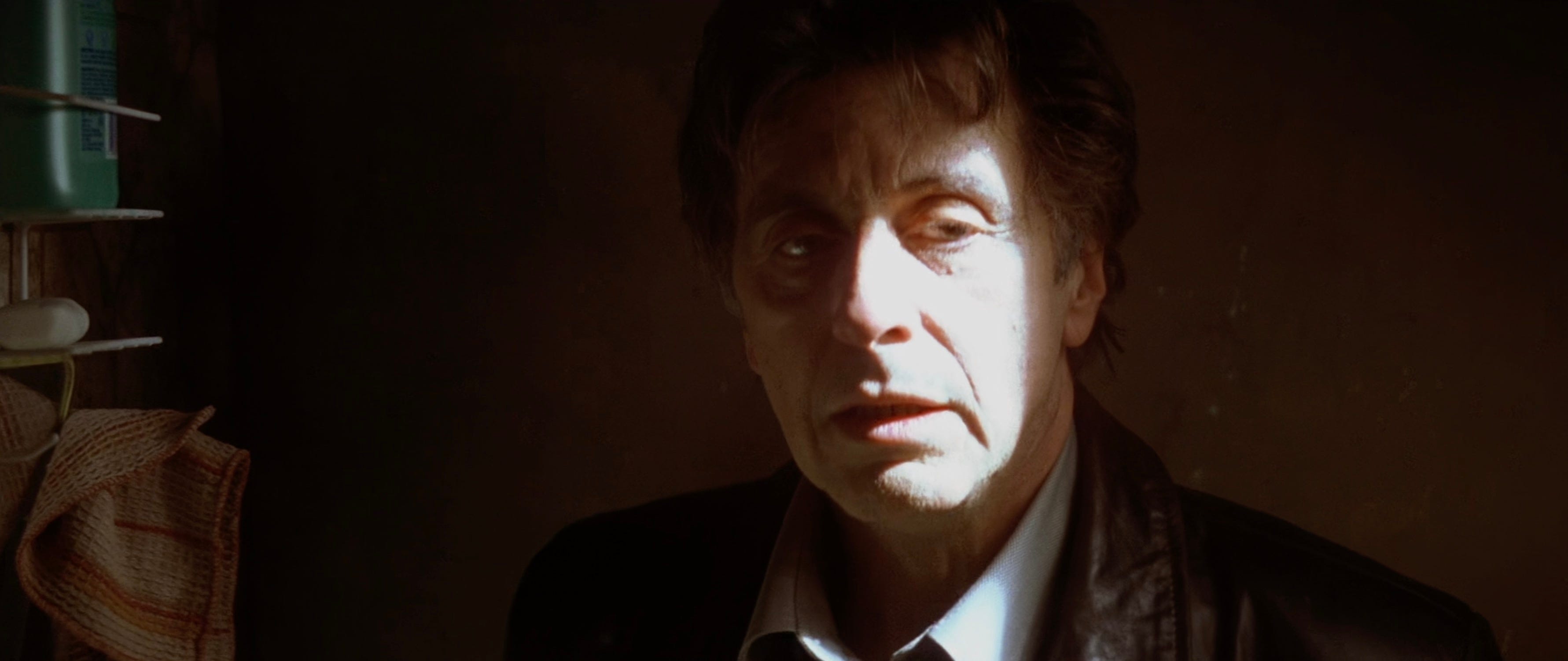
Welcome to my recurring Five-Star Three-Star Cinema Club column, in which I am out in search of that rare delight: the five-star three-star movie. Inspired by my post about 1996’s Twister, and expanded upon in a follow-up post, the idea here is to build out a canon of movies that are not exactly great, and certainly not transcendent, but are great at being the exact kind of perfect mediocrity you sometimes crave on a Sunday afternoon.
These posts are for paid subscribers only.
If you know anything about my movie tastes, you know about my fondness for Christopher Nolan. “Fondness” may be putting it lightly, but I recognize being a Nolan fan isn’t “cool,” so allow me some understatement, just to save face. (But have you rewatched Tenet lately?) Amid Nolan’s universally excellent body of work, there is one film that stands out, that maybe doesn’t quite fit. Insomnia was Nolan’s first studio film. Having premiered Memento at festivals, doors started opening, and Steven Soderbergh got him set up at Warner Bros. to remake the 1997 Norwegian thriller, which had starred Stellan Skarsgård. The indie-to-studio pipeline was nothing new, but this was a time when the big step up meant something mid-budget for adults, not a $200 million blockbuster. In Nolan’s case, those would come later, after he’d proven his chops with Insomnia.
There’s no time-bending in Insomnia—some flashbacks make their way in, though—and the scale is smaller than people are used to with Nolan at this point. The film is a remake, and while he helped develop the screenplay and did his own pass, he left sole writing credit to Hillary Seitz. It’s a straight ahead crime picture. Unusual for Nolan, and thus often forgotten. It’s possible the other reason it’s often left out of conversations about Nolan is that it is, at heart, a three-star picture. You see where I’m going with this. In fact, the beauty of the film is its self-assuredness in its three-star nature. Insomnia is a rare case of an American remake lightening up a dark European film, making it more Hollywood, but actually improving upon it as a result.
I didn’t always have that opinion. I remember watching Insomnia when it came out and thinking it was perfectly fine. Very good, even. I watched it a few times over the years, but it never rose to the heights of Memento before it, or any of Nolan’s subsequent films. Some time in the ‘00s, I watched the original Insomnia and fell for it. This was that good, uncut, European shit. Rewatches of both films last year, during my Oppenheimer fever, revealed that I had it all backwards. Fitting for a Nolan movie.
In the original 1997 film, Skarsgård plays a police officer who arrives in a city north of the Arctic Circle to investigate the murder of a local teenage girl. Disgraced after being caught sleeping with the main witness in one of his cases, Skarsgård ends up accidentally shooting and killing his partner while chasing their suspect in the fog. Skarsgård goes about tampering with the evidence to pin the blame for the shooting on their murder suspect. Things get hairy, though, when the suspect, a local crime novelist, blackmails Skarsgård with his knowledge of who really shot the partner. For Skarsgård’s character, everything starts spiralling out of control as he reveals more and more of his own depraved personality while suffering from a lack of sleep due to the endless summer light that far north.
Nolan’s version of the film follows the plot of the original quite closely, but he makes some important, substantial changes. In his film, Al Pacino takes on the lead role, playing Detective Will Dormer, a legendary L.A. cop who is now under threat from an internal affairs investigation into a case in which he planted evidence in order to secure the conviction of a child murderer. His partner, played by Nolan regular Martin Donovan, has decided to cooperate with the investigation. And then there’s Hilary Swank as a local rookie officer who, in a hilariously screenwritery trope, wrote her dissertation at the police academy on Dormer’s detective exploits. Crucially, there is no revelation of depravity here. Dormer is, at heart, a good cop. Even the bad thing he did was in the interest of justice. He’s a likeable hero that we want to root for, in good Hollywood style, and the rest of the remake follows suit, going for clean Hollywood satisfaction where the original attempted something darker and more ambiguous.
That should make Nolan’s Insomnia a real downgrade, but the director recognized something in the original film that would translate, not just in language, but in style.
“I watched it twice in one sitting, because I really loved the texture of it,” Nolan recalls of the original film in Tom Shone’s excellent book The Nolan Variations. “It’s about sleeplessness; it’s about the distortion of thought processes, like Memento, with this unreliable narrator and this very subjective experience. I really wanted to try and get into people’s heads the way I had in Memento, so it was quite a specific relationship, like, ‘I’d love to do this in a slightly different way. If you take that situation, you can make it into a Hollywood movie with big movie stars. You could make it like Heat.’”
Of course, Nolan, always interested in subversion, was also attracted to the idea of doing a modern noir set entirely in blinding daylight. But in adapting the original film for a wider American audience, he inverted even more about it.
“The original film is very brilliant in its process of slow alienation from the protagonist,” he says in the book. “My film is the opposite: You go with him on the journey and, in a way, you get closer to him at the end than you are at the beginning.”
Key to that for Nolan wasn’t just the changes in script, but in stars. Skarsgård is a great, great actor, but Al Pacino is a big movie star. So was Hilary Swank at the time. As was Robin Williams, who plays the killer. That’s three big stars, each an Academy Award-winner, fronting a straight ahead Hollywood thriller done with a decent budget and just enough intelligence. Rewatching the 1997 film last year, I found myself moderately enthralled by its dour subject, but my interest flagged. The character’s journey is, frankly, an unpleasant one, and the cat-and-mouse aspect of the plot never gets particularly exciting. It’s a smaller movie, and in the year 2024 it feels more like a starter pistol for the great glut of Scandinavian noir that would come to inundate us in the decades since. Still very good, but no longer all that special. Nolan’s film, meanwhile, doesn’t really try to be anything special outside of its core premise and the production values on display. The sort of thing Hollywood used to do on the regular.
The biggest upgrade in Nolan’s version is Williams. In the original film, the killer is almost a non-entity, screen presence-wise. But Williams is Williams, and Nolan knows what he’s got on his hands. He builds up to the actor’s appearance slowly, deliberately, only finally revealing him more than halfway into the film. At that point, over a series of meetings and phone calls—great phone call movie, by the way—the movie indulges in a wonderful Strangers on a Train dynamic. Williams is the pathetic killer who lies to everyone and himself about his true nature, imagining himself a would-be detective, partnered with Pacino, who responds with the most visceral loathing.
The amazing thing is the performances Nolan got out of both stars. Insomnia is, without question, Pacino’s last great performance until The Irishman. He goes big in necessary moments, but it’s a performance defined by fatigue, and as the film progresses, Pacino looks worse and appears more confused. His anger and self-doubt get all jumbled up in his sleeplessness until all that’s left is a husk of a man who thought he could achieve justice in injustice. Williams, coming off an Oscar win and then a string of failures, is incredibly present in his role. There’s no schtick in what he does. He plays this killer as a man who really does believe himself to be good, charismatic, smart, and in control. He talks to Pacino as though everything happening is perfectly ordinary. It’s creepy and compelling in equal measure, and makes for a great time at the movies.
At a craft level, the film is also quite stellar. Nolan favours simple setups, finding keneticism and clever comment through his favoured cutting on action. I don’t know that any other filmmaker in history has loved cutting on action as much as Nolan. The budget also affords beautiful vistas of British Columbia standing in for Alaska, and Nolan makes amazing work of some key action sequences. The chase through the fog that ends with Donovan being shot is beautifully disorienting. A footchase on floating logs, in which Pacino falls through and is trapped under the water might be some of the most striking work of Nolan’s career. As the insomnia takes over, Nolan goes heavy with quick flashbacks, lasting no more than a few frames each. The light from the sun seems to pulse in moments. In one sequence close to the end, Pacino is hypnotized while driving by the back-and-forth of his wipers. The cuts to the wipers are assaultive as they are mesmerizing.
“I guess it’s about what you thought was right at the time. Then what you’re willing to live with,” says Muara Tierney’s hotel owner character, after Pacino has told her about planting evidence in an old case. Even in a film on which he doesn’t share a writing credit, Nolan is still all about the moral weight of action and consequence, perhaps the great theme of his career, all the way through Oppenheimer. But unlike Oppenheimer, or even his Batman movies, Insomnia isn’t aspiring to anything more than what it is: a genre picture. It is, in fact, defiantly what it is. Taking a thorny Norwegian movie, Nolan twists the material back toward the very genre elements the original eschewed. Right down to the ending. In the original, the protagonist is confronted by the rookie who has pieced together what he did, but ultimately lets him go off to live with his own rottenness. Nolan’s Insomnia ends with Pacino shot, and as Swank goes to throw the evidence of his misdeed into the water, he stops her. The flawed mentor setting his mentee off on the path of righteousness. “Let me sleep,” he says, before closing his eyes and taking his last.
That’s a movie right there. A three-star movie. But a five-star three-star movie.
The Five-Star Three Star Cinema Club Canon (so far):
Insomnia (2002)
Didn’t quite make the cut:
Well, god dammit, now I have to watch INSOMNIA again.