

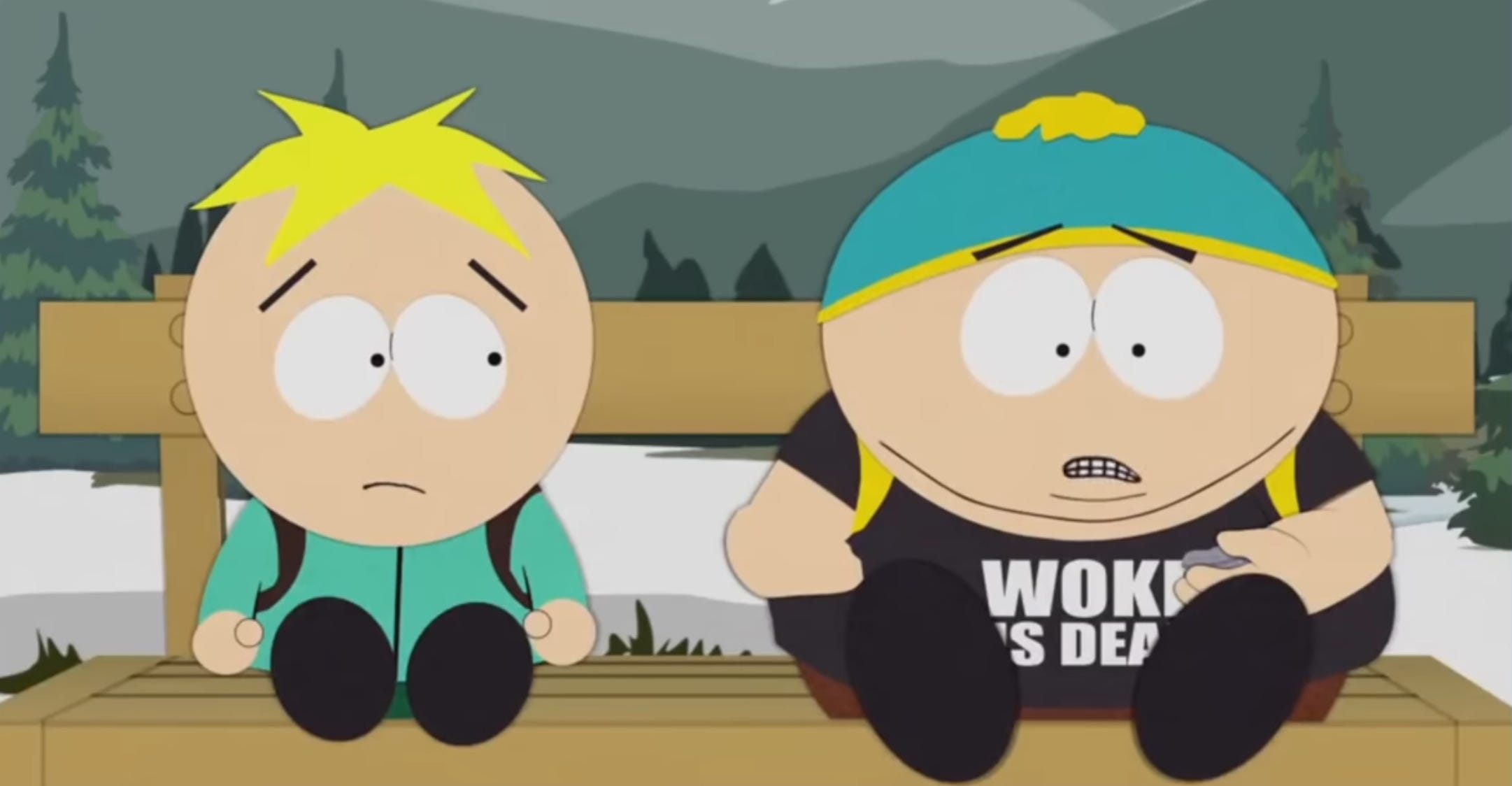
It took me a bit to finally get to the new South Park episode. You might have heard about it. After being on the bubble amid Paramount’s sale to Skydance, creators Trey Parker and Matt Stone signed a $1.5 billion deal with the network, and then dropped their twenty-seventh season premiere, “The Sermon on the Mount",” in which they depicted Donald Trump as a new iteration of their Saddam Hussein, with a micropenis. Every decade or so, “South Park,” seems to find itself central to the moment, responding to it, and driving it. When it first debuted, pure vulgarity being spouted by children was its novelty. As a work of satire, its creators’ libertarian ideas about speech and social mores were pointed and, frankly, correct. This was the late ’90s, when a stew of social and political dynamics on the left and especially the right made the attack on any reasonable sensibilities quite profound, on top of being hilarious. The show was an equal opportunity offender, but more than that, its approach to vulgarity as something human and natural was exciting. Especially if you were a kid at the time. I cannot tell you how many times I’ve seen the film South Park: Bigger, Longer, & Uncut, a true masterpiece.
Somewhere along the line, as progressives made strides on issues of representation, gay rights, the election of a black president, and more, South Park started to feel more and more out of touch in progressive eyes. The pushback on left-of-centre censoriousness was not particularly appreciated, and the show’s insistence on continuing its gross, vulgar depictions of minorities—trans people in particular—started to feel, well… problematic. I hate to be a ninny about it, but there was genuinely something off the mark about how the South Park guys were targeting their spoofery. It was enough that it even started colouring my perception of their earlier work, which I’d loved. Was it all essentially right-wing the whole time? Had I misunderstood the free vulgarity, thinking it a fun and cool poke in the eye, when in fact there was something meaner underlying?
Contexts change, though, and the remarkable thing about the season 27 premiere is that it demonstrates Stone and Parker understand this well. It’s clear from the episode that they find Trump dangerous, evil, and, most surprisingly, distasteful. I suppose I’d never considered that the South Park guys could ever find anything truly offensive, but in “The Sermon on the Mount,” they reveal themselves appropriately protestant. They also reveal their core understanding of vulgarity and the purpose it serves. Perhaps their targeting is not always precisely aimed, but they see such bottom-of-the-barrel offensiveness as a leveller. There are no sacred cows in South Park, which is why Jesus can appear as a character in the premiere, there at the town’s public school to convert all the kids. Illegal, and also, as we learn, under duress from Trump, who has threatened to sue him frivolously otherwise. What Stone and Parker identify now is a change in the playing field, where the vulgar tactics they used as a way to create commonality between people have been become the primary mode of attack by those who want to do precisely the opposite.
The episode is very funny, but also the most intelligent read on the political degeneracy of the right-wing in this era that I’ve yet encountered. Watching Cartman have to reckon with his purpose in a world where people now just say antisemitic shit and throw around the word “retard” at every opportunity is quite a trip. The artists filtering their shock at the world they now live in, and their relationship to it, is not something I would ever have expected, yet it does fit perfectly with what they’ve always tried to do. Amazing to watch an ongoing work of art clarify its mission so many decades in.
On the blog this week, I wrote about a piece of “AI art” created by Andrew Dominik, an artist I greatly respect, for the anniversary of Nick Cave’s song “Tupelo.”
Tupelo Uncanny

“Tupelo - 40th Birthday,” as it’s called on YouTube, is a music video—or short film—composed of still images of Elvis Presley and other scenes from the archive, animated using AI tools. It is an act of morally questionable resurrection. Perhaps morally reprehensible. That is Dominik’s provocation.
Reading, Watching, Listening
“Ms. Rachel grew up on Mister Rogers. Now she’s carrying on his legacy,” by Caitlin Gibson, is an amazing profile of the magical woman who has tamed my sister’s baby, and countless children all over the world with her YouTube edutainment series. It’s an article written in the shadow of controversy over Ms. Rachel’s apparently offensive stance on the need to protect children in Gaza. This woman is, in my opinion, a fucking hero. She is serious about helping developing children learn and grow, and she has met the moment in a way so many in her position have been too cowardly to do.
“Follow Excitement!” by Rizzle Kicks, is my new summer jam. I first discovered the British rap duo, whose music is trumpet-heavy and often comedically tinged, some years back, when they were already no longer putting out new music. I’d somehow missed that they made a comeback last year, and a few weeks ago they put out another song, featuring the singer Rachel Chinouriri. It’s a bop, and totally struttable. Perfect for the season.
“Eyeless in Gaza,” by John Ganz, is another banger from my second-favourite Unclear and Present Danger podcast co-host and frequent writer on fascism. In the newsletter piece, Ganz locates the increasingly fascistic, imperialist logic of Israel’s defenders as a consistent byproduct of historical forces we’ve seen before. “The return of naked imperialism, with its division of the world into biological races, is a grave issue for all minority peoples like the Jews,” Ganz writes. “Perhaps one day Jews and Palestinians will find a source of solidarity in the repeated experience of being used up and discarded by “history’s actors.” To my fellow Jews, don’t take any comfort in temporary privileges and titles granted by our masters. Don’t do their dirty work for them.”
“End of the Beginning,” by Djo, aka Joe Keery, is my new music “discovery.” I knew the Stranger Things star had a music career, but I wasn’t aware that he’s actually good! And he really is good! I need to dive more into his catalog, but “End of the Beginning” is the song I was first recommended, and it’s excellent.
That’s all for this week! Thanks for reading, and thanks for subscribing. It really means a lot. Come back next week for more!