
Late Eastwood #1: Hereafter
A few words about seeing light

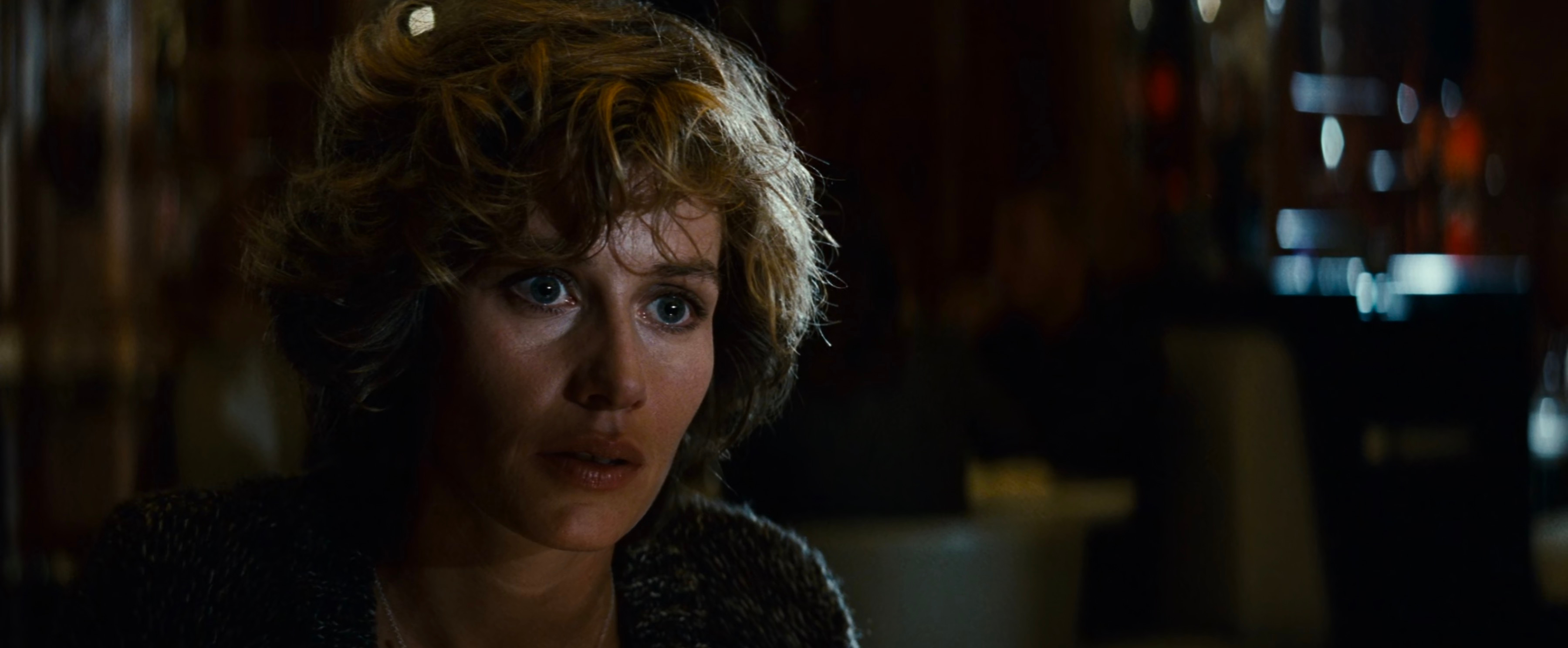
Welcome to Late Eastwood, my tour through the late work of the still very much alive Clint Eastwood. This is a tour through the prolific director’s films since 2010, a period of his career with which I’m almost wholly unfamiliar. With his new film, Juror #2, on the horizon, I will be combing though the films leading up to it, so I can learn a bit more about what motivates a 94-year-old to keep practicing his art.
Hereafter is the last new Clint Eastwood film I’ve seen, and that was 14 years ago now. I was originally intending to skip this one, to start with J. Edgar, his biopic of the FBI director, but thinking on it, I decided it would be best to start with the movie that, in a way, turned me off of Eastwood, that kept me from following his late output. The truth is, Eastwood’s been in the “late” period of his career for a very long time. What is Unforgiven if not a late film? But there’s something, to my eye, having not even seen the films, that happens to his work in the 2010s. We really are in the late period now, and it seemed fitting to start the exploration with a look at a film very literally about death, giving myself an opportunity, perhaps, to reevaluate.
Looking back on my reaction to Hereafter at the time, such as I remember it, I was irked by two things. The first was the use of real-life tragedies in the film—the 2004 tsunami, and the 2005 London Tube bombings—which felt unseemly, and frankly still do. The weight of those mass scale horrors, and focusing on a couple of survivors, treating their experience as paths to enlightenment… well, like I said, irksome. The movie could have been essentially the same without them, though I understand part of Eastwood’s attraction to the project was their inclusion. My other issue at the time—chalk this up to the more stringent anti-theism of my 20s—was the film’s straight-faced ideas about the reality of the afterlife. On this, I have softened over the years. Not in my belief that it’s all nonsense, but in my acceptance that such ideas both speak to people and have broad metaphorical weight. Viewed outside the scope of literalism, Hereafter is a film about accepting the reality of death and the human connections that make death and life meaningful.
Something I didn’t expect, but perhaps should have, is that all that time away from Eastwood would make me appreciate more his skill as a filmmaker. All the talk of single takes and speedy productions got in my head, I suppose, creating in my mind the image of a filmmaker who lacks care. A silly notion, considering all I’d seen from his work, but I guess in this late period it’s been easy for me to write off his impatient approach as something that could hardly conjure good filmmaking. Not at his age, certainly. My own biases getting the better of me. Some of the most interesting, vital work happening in cinema is coming from such elder statesmen, whose knowledge of the form is embedded now in their every fibre, and whose interests stretch outside the confines of expectation. Which is all a way of saying this film is staggering in its craft.
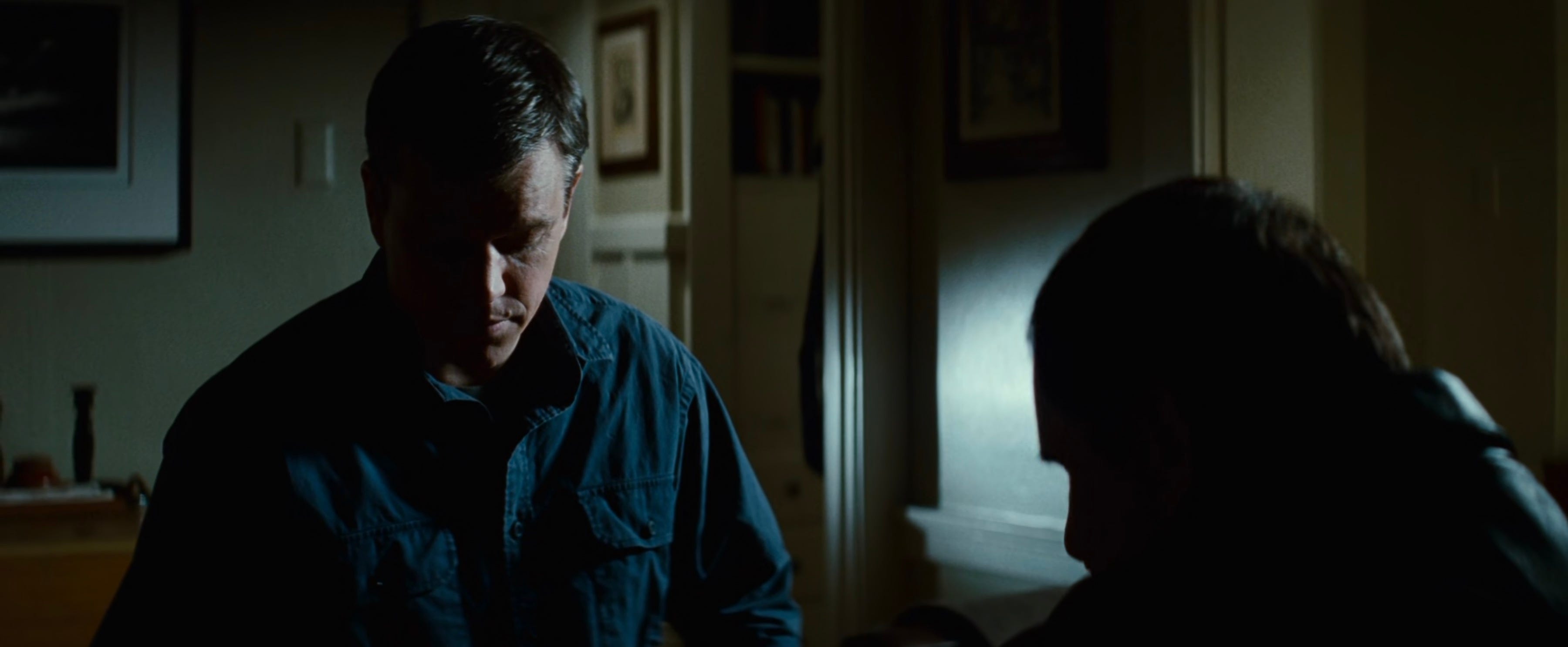
The opening sequence, set in Thailand during the tsunami, was the film’s big action highlight, and it’s well done, but it also has more than a whiff of VFX department directing, and the attempt to dress Hawaii up as Thailand is only barely credible. It’s the film’s next two scenes that show Eastwood’s strengths. We’re introduced to Matt Damon, playing a medium, whose brother has him do a reading for a man played by Richard Kind. Shot by Tom Stern in beautiful shadows and highlights—god, we never should’ve stopped shooting on film—the scene doesn’t do much more than basic shot-reverse-shot, but with each edit, the camera gets closer to Damon and Kind’s faces, and each time a connection grows stronger between them, even as Kind lies, claiming the word “June” means nothing to him. The reality, of a complicated love, breathes under the surface of every frame, a testament to the power of simplicity in filmmaking.
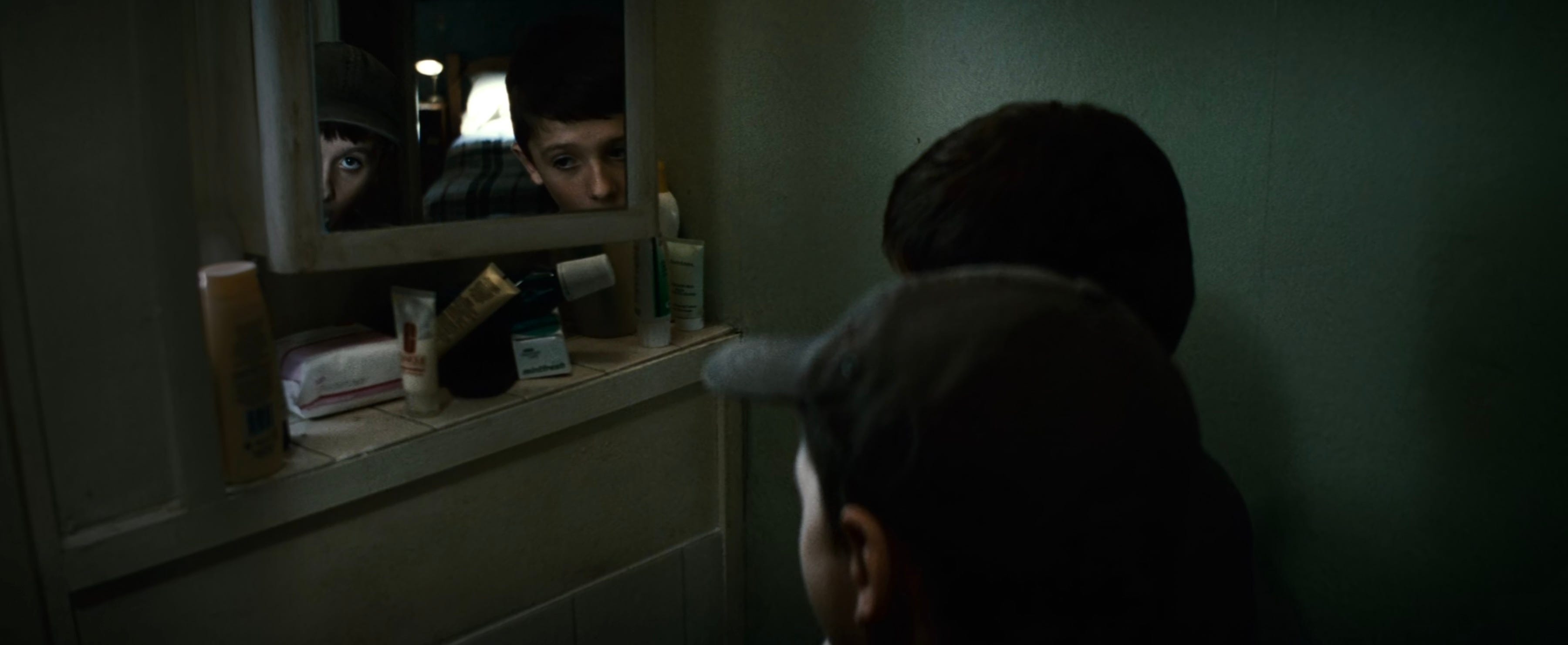
The scene after that, set in London, introduces us to twin brothers, two young boys who we come to understand are living in difficult circumstances, with a mom suffering from addiction. In one sequence, the two boys clean up and prepare for bed, hearing their mom stagger in downstairs, all with hardly any dialogue. Who needs words when the camera is so intuitive? Following characters through the confines of a dimly lit house, framing them together but never quite contained by the space they occupy, focusing in on moments of mutual understanding, of connection. A professional photo we saw them having sat for just prior is on the table, next to a birthday cake that their mom doesn’t register at all, leaving her now empty liquor bottle beside it. It’s a world of storytelling, point-of-view, and character, effortlessly painted on the screen.
Throughout the film, it’s this simplicity of style that always breaks through, complemented by a screenplay that is at times too simplistic itself, but more often allows its characters to express truths about themselves in their actions, without any judgement. Bryce Dallas Howard enters the picture as a possible love interest for Damon, meeting him at a night class all about Italian cooking. They share a romantic moment when she’s blindfolded, Damon feeding her things to taste and identify. She invites herself over, and then learns he’s a psychic and coaxes him into doing a reading. When he touches on her relationship with her father, a nerve is struck. As he predicted, she needs to leave. In another film, she’d be back, but that’s that for her character. The power Damon has, that access to loss, is simply too overwhelming for some.
It’s a scene that’s mirrored later, when Damon travels to London and the film’s three plot lines converge. He’s a book fair, watching Cécile de France do a reading from her book about her experience in Thailand and the world of science investigating the afterlife, when one of those young boys spots him. He knows who he is, from the internet, the result of his quest to communicate with his brother, who dies during the film. Damon tries to send the boy off, but he’s followed to his hotel, and finally relents. He’ll do a reading.
“If you’re worried about being on your own, don’t be. You’re not, because he is you, and you are him. One cell, one person. Always,” Damon conveys to the boy.
In the film’s final scene, Damon waits for de France, for whom he’s left a letter and hoped for a proper meeting. Seated at a cafe, watching her look around for him, he envisions a future, a romance, and then he decides to stand up. The greet, shaking hands. To that point, we’ve seen that whenever Damon touches hands with someone, he is taken to the hereafter, given sight, seeing the light. We are not given that here at the end. Eastwood leaves us only with two people shaking hands, saying hello, and sitting down for a drink, sharing a connection. It’s the light Eastwood sees.